Professional area
Three professions, one ecosystem to join
Detailed documentation and methodology for the partners who build, support or finance IMM Group projects.
Architects · engineering firms · developers
A construction system designed for inclusive housing
Screw piles, light galvanised steel framing (LGS) and dry floors: the system does away with the concrete slab, conventional tiling and wet external render. The goal: reduce the risks of conventional construction while keeping the flexibility that adapted housing programmes require.
01
Programming
Immclusif Concept translates the needs of the territory and future residents into a tailored programme.
02
Design
Adapting the construction system to the site, its uses and the constraints of the programme.
03
Manufacturing
LGS framing assembled in the factory: walls, façades, dry floors, roof structures.
04
Dry site
Screw piles, on-site assembly, shorter timelines and less disruption.
*Initial comparative estimates, based on 500 homes per year versus equivalent conventional construction.
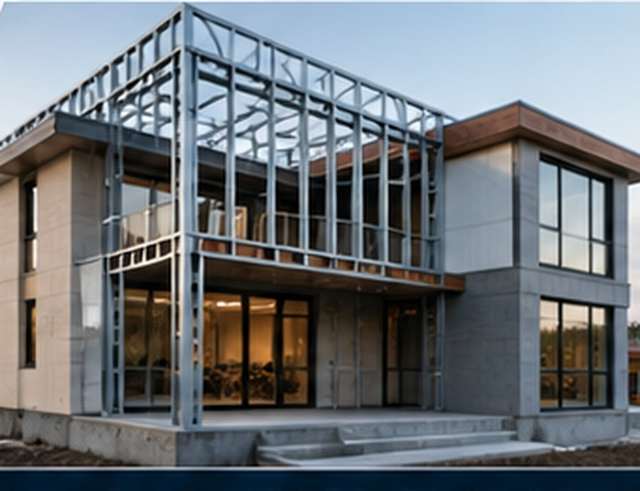
Dry site, factory assembly, screw piles: the structure is ready before it even reaches the site.
Why off-site construction matters to a project owner
Off-site construction moves a large share of the work from the site to the factory: stable manufacturing conditions, continuous quality control, fewer weather risks and fewer vehicle movements. Removable screw piles also limit permanent structures in the ground and preserve the reversibility of the site.
A living R&D tool
Immclusif Factory continuously improves its materials, energy performance and processes: it is also a testing ground for engineering firms that want to trial construction solutions on real programmes. Logistics are being decarbonised, with trucks gradually replaced by electric heavy goods vehicles.
Certifications & approvals
Quality labels, certifications and site references will be published as they are validated (impact data are already being progressively consolidated through life-cycle assessments: LCA).
Are you an architect, an engineering firm or a developer?
Disability centres · care providers · social landlords · local authorities
Building an inclusive housing project in your area
Omvita carries the social dimension of the model: it steps in before construction so that the programme meets a real need rather than the other way round, alongside local authorities, social landlords and health and social care providers.
01
Territorial assessment
Identifying real needs: older people, disability, young people, intergenerational living.
02
Tailored programming
Omvita and Immclusif Concept translate the need into a housing programme.
03
Structuring
Partnership with the social landlord, the local authority and the ecosystem’s funders.
04
Support
Social and human support provided by Omvita, well beyond handover.
The pipeline today
Several housing types already under way: older people, people with disabilities, young people and students, intergenerational housing, vulnerable groups. Project, territory and case-study pages will be published as they are cleared for communication.
Do you represent a local authority, a social landlord or a care provider?
Banks · social-economy funds · institutional investors
A model that combines social value and sound asset management
Two complementary vehicles carry the group’s financial dimension: Omvita Life receives philanthropy and donations to fund what real estate alone cannot fund; Omvita Immvest, as a social-impact property company, builds a rental portfolio with affordable rents and a protected inclusive purpose.
Omvita Life — endowment fund
Receives philanthropy, donations and institutional partnerships. Funds the public-interest initiatives that the real-estate model alone cannot cover: independence, disability, isolation, intergenerational ties.
Omvita Immvest — social-economy property company
Holds the projects developed by IMM Group, particularly off-plan (VEFA), and projects carried out on behalf of third-party developers. Long-term ownership of high social-value assets, affordable rents.
What a “social-economy property company” means
A social-economy property company acquires and holds real-estate assets over the long term rather than reselling them in the short term, with a social-value objective written into its mandate: controlled rents and a use that is protected over time. This is what allows Omvita Immvest to hold off-plan (VEFA) projects on behalf of the ecosystem and of third-party developers, without the social objective depending on the resale cycle.
Partners
Structure & indicators
Functional overview at this stage (see the group chart on the Home page); details of the capital structure and consolidated financial indicators will be published later for the investment file.